Unveiling the Cosmos: Exploring the Mysteries of the Universe Through Modern Astronomy
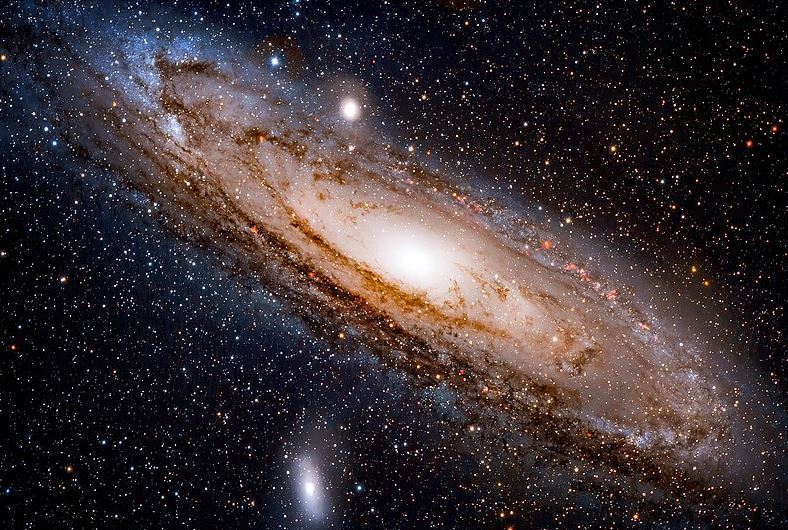
The night sky has always been a source of wonder and inspiration. For centuries, humanity has gazed at the stars, seeking to understand the vast and mysterious cosmos. Astronomy, the scientific study of celestial objects, phenomena, and the universe as a whole, has been instrumental in uncovering the secrets of the heavens and expanding our understanding of existence.
The Fascinating Scope of Astronomy
Astronomy covers a vast range of topics, from the smallest particles in interstellar space to the largest structures in the universe. Some of the key areas include:
Planetary Science:
The study of planets, moons, and other celestial bodies in our solar system and beyond helps us understand planetary formation, atmospheres, and the potential for life.Stellar Astronomy:
Stars are the building blocks of galaxies. Studying their life cycles, from birth in nebulae to their explosive deaths as supernovae, reveals the processes that shape the universe.Galactic and Extragalactic Astronomy:
Galaxies, massive systems of stars, gas, and dark matter, are the fundamental structures of the universe. Exploring their dynamics and evolution provides insights into the origins of the cosmos.Cosmology:
This branch of astronomy delves into the universe's large-scale structure, origins, and ultimate fate, tackling profound questions about the Big Bang and dark energy.Astrobiology:
As we explore distant planets and moons, the search for extraterrestrial life combines astronomy with biology, chemistry, and geology.
The Role of Technology in Modern Astronomy
Advancements in technology have revolutionized the field of astronomy, allowing us to explore the universe in unprecedented ways.
- Telescopes and Observatories: Ground-based and space telescopes like the James Webb Space Telescope (JWST) and Hubble provide high-resolution images of distant celestial objects.
- Radio Astronomy: By detecting radio waves from space, astronomers uncover phenomena like pulsars and interstellar signals.
- AI and Data Analytics: Modern astronomy relies on artificial intelligence to analyze vast amounts of data collected from observatories.
- Space Missions: Probes and rovers like Voyager, Perseverance, and the Parker Solar Probe explore our solar system and beyond, capturing invaluable data.
Key Discoveries That Shaped Our Understanding
Over the years, astronomy has made groundbreaking discoveries that have reshaped our view of the universe:
- The confirmation of exoplanets, showing that planets orbiting other stars are common.
- The discovery of gravitational waves, offering a new way to observe cosmic events.
- Insights into the nature of dark matter and dark energy, which make up most of the universe.
Why Astronomy Matters
Astronomy is more than a pursuit of knowledge; it drives innovation, inspires curiosity, and unites humanity in the quest to understand our place in the cosmos. From GPS technology to advances in optics and imaging, astronomical research has practical applications that benefit everyday life.
Moreover, astronomy reminds us of the fragility and uniqueness of our planet, fostering a sense of responsibility for Earth’s preservation and the importance of international collaboration in scientific endeavors.
The Future of Astronomy
The future of astronomy is bright, with upcoming missions and technologies promising even greater discoveries:
- The European Extremely Large Telescope (E-ELT) will provide unprecedented detail of celestial objects.
- Missions like NASA’s Europa Clipper will investigate the habitability of icy moons.
- Advances in space exploration may one day answer the age-old question: Are we alone in the universe?
Conclusion
Astronomy continues to push the boundaries of human understanding, revealing the intricate and awe-inspiring nature of the cosmos. As we look to the stars, we uncover not just the mysteries of the universe but also insights into ourselves and our place within this vast expanse.
The journey to unravel the cosmos is far from over. With each discovery, astronomy brings us closer to answering fundamental questions about existence, ensuring that humanity’s gaze will always remain fixed on the stars.